Let’s have a heart-to-heart: have you noticed that the “Sunday Scaries” feel a bit more intense lately? It’s not just about the pile of emails waiting for you on Monday morning. It’s that subtle, nagging feeling that the professional world is transforming into something we barely recognize. One day we’re mastering a new software and the next, a video of an AI doing that exact job in three seconds goes viral. It’s enough to give anyone a bit of career vertigo.
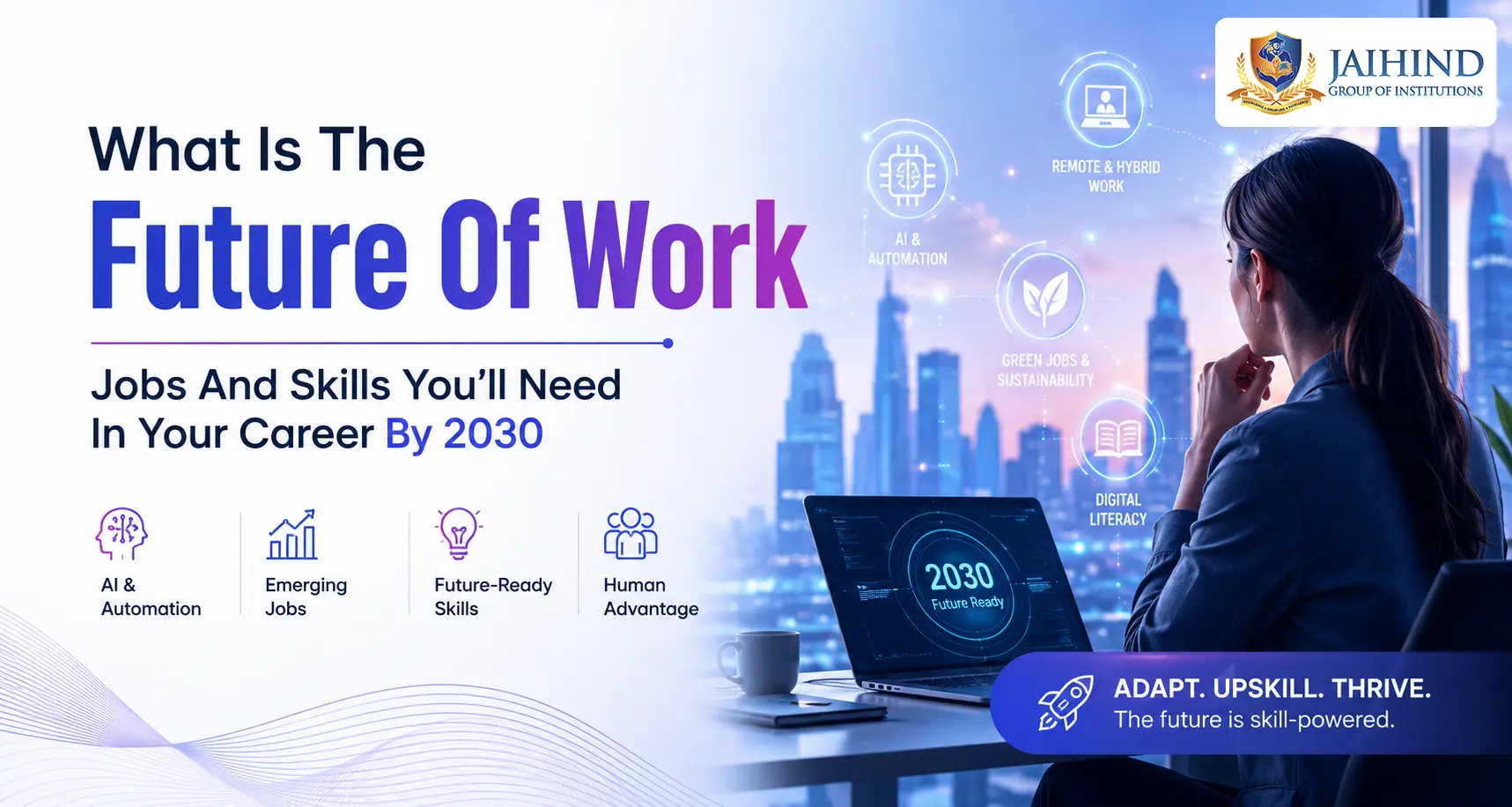
Currently, we are navigating what many call the Great Reshuffle. The old-school promise of “study once, work for forty years” is officially a relic of the past. Today, the job market feels like a high-speed blender. We’re seeing a strange mix of remote work freedom, the rise of the gig economy, and automation that moves faster than we can keep up with. This friction between traditional education and these new demands has created a massive gap, one that causes anxiety for many but offers a massive advantage to those who prepare for the future of work, jobs and skills in 2030.
Experts suggest that the half-life of a learned skill is now only about five years. That means half of what you know today might be irrelevant by the time 2030 rolls around. But here’s the good news: the future isn’t about robots taking your chair; it’s about you becoming the person who knows how to move the chairs.
8 Essential Skills Required in 2030
To thrive by 2030, you don’t need to be a tech genius, but you do need to be future-ready. Whether you are looking for which technical skills are in demand or how to sharpen your personality, here are eight simple skills that will make you stand out:
The Beginner Mindset: In 2030, being an “expert” can actually be a trap. The best skill you can have is the willingness to be a beginner over and over again as industries change.
Virtual Collaboration: It’s one thing to send an email; it’s another to lead a team across three time zones. Mastering digital teamwork and keeping people motivated through a screen is a soft skill for a successful career.
Creative Problem Solving: AI is great at following patterns, but it’s bad at thinking outside the box. Your ability to find unusual solutions to new problems will keep you indispensable.
Information Filtering: We are constantly hit with data. The skill of the future is knowing what to ignore so you can focus on the signals that actually matter for your business.
Conflict Resolution: As workplaces become more diverse and decentralized, misunderstandings will happen. Being the person who can calm a situation and find common ground is a massive asset.
Tech Fluency: You don’t need to be a developer, but you do need to understand the logic of tech. Understanding how data flows and how systems talk to each other is among the most vital skills required for future jobs.
Ethical Judgment: As we use more automation, humans will be the “moral compass.” Knowing the difference between what a machine can do and what it should do will be a core leadership trait.
Storytelling: Whether you are selling a product or an idea to your boss, being able to wrap facts in a compelling human story is a skill that will never go out of style.
Designing Your Future
The year 2030 isn’t a finish line; it’s a new starting point. The complications we see today like the rise of AI and the shift in how we work are simply opening doors to careers that haven’t even been invented yet. The goal isn’t to race against the machines, but to run with them while bringing your unique human perspective to the table. By focusing on the future of work jobs and skills in 2030, you aren’t just preparing for a job; you are preparing for a lifetime of growth.
The Road Ahead: From Anxiety to Opportunity
The transition to 2030 is less of a cliff and more of a bridge. The complications we see today, the volatility, the AI boom and the shifting office norms are simply the birth pains of a more dynamic way of living. Yes, things are changing but they are changing in a way that allows us to do more meaningful, creative and human work.
The professionals who flourish in the next decade will be those who view learning as a lifelong adventure rather than a one-time destination. It is about building a foundation of soft skills for a successful career that technology cannot replicate while staying curious enough to adopt the latest digital tools.
The key is to stop waiting for the old normal to come back and start building the version of yourself that belongs in the future of work, jobs and skills in 2030. The world of 2030 belongs to the lifelong learners who aren’t afraid to adapt.
The world is changing fast, but you don’t have to navigate it alone. At Jaihind Group of Institutions, we provide the environment and the expertise to help you master the skills required in 2030.